
In 2019, the U.S. National Science Foundation, together with US institutional and international partners, approved funding of the IceCube Upgrade project, an improvement that would significantly push the scientific capabilities of the IceCube Neutrino Observatory. Seven years later, the IceCube Upgrade has now been successfully deployed, marking the first significant expansion of IceCube since its completion 15 years ago.

Located at NSF’s Amundsen-Scott South Pole Station, IceCube uses one cubic kilometer of Antarctic ice to detect nearly massless particles called neutrinos that travel through outer space. Because they rarely interact with matter, neutrinos can provide a lens into otherwise obscured extreme cosmic environments, carrying valuable information about their sources. Thus far, IceCube has discovered astrophysical neutrinos, identified two galaxies as neutrino sources, and observed neutrinos from our own Milky Way galaxy.
“The successful deployment of the IceCube Upgrade project is a feat of U.S. engineering that demonstrates significant logistical capabilities in Antarctica,” says Marion Dierickx, NSF program director for IceCube. “This upgrade will secure the nation’s continued leadership in neutrino physics for years to come, paving the way for new cosmic discoveries.”
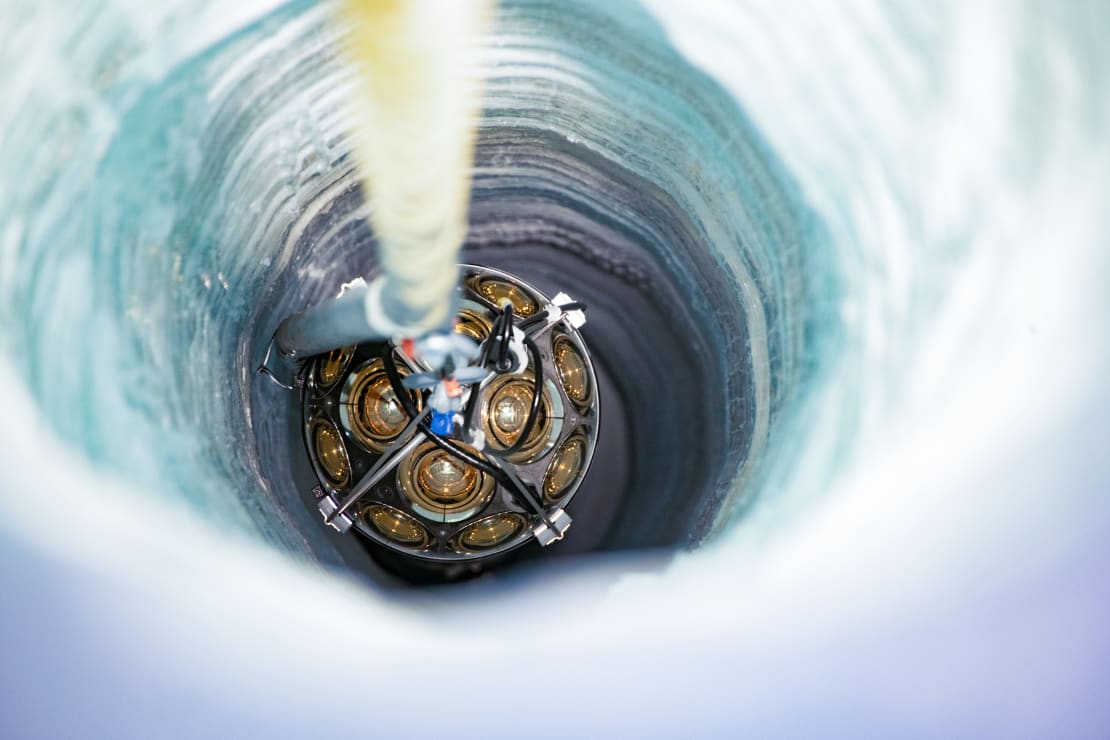
IceCube uses more than 5,000 light sensors to capture the faint light emitted by secondary charged particles produced by neutrino interactions in the ice. The pristine quality of the Antarctic ice makes it an ideal medium for detecting this light. The IceCube Collaboration, with over 450 scientists from around the world, then takes these light patterns to reconstruct the energy and direction of the neutrino in order to determine its origin.

For IceCube, the Upgrade will allow more precise measurements of neutrino properties like neutrino oscillations, a phenomenon where atmospheric neutrinos can morph into different types or “flavors”—electron, muon, and tau. With these improvements, IceCube will be the premier neutrino experiment for long-baseline oscillation measurements using atmospheric neutrinos.
Using the enhanced devices deployed in the ice, scientists will be able to better characterize the surrounding ice, leading to improved reconstruction of neutrinos and a reanalysis of 15 years of archived data. The Upgrade will also improve the scientists’ ability to determine the cosmic ray composition and measure neutrinos from galactic supernovae.
The Upgrade consists of five more closely spaced and more densely instrumented cables, or strings, of light sensors at the bottom center of the 86 existing strings, adding more than 600 new and enhanced light sensors and calibration instruments to the ones already embedded in the ice.

Years of preparation and international coordination for the Upgrade were condensed into three consecutive 10-week field seasons (2023-2026) for construction, with drilling and installation completed in the most recent season. The equipment used to drill five holes a mile and a half deep into the Antarctic ice was fabricated in the US and shipped to the South Pole. The first two field seasons were spent refurbishing, testing, and winterizing (i.e., storing sensitive components in a special heated area to survive the cold) all of the systems and equipment and setting up the drill camp.
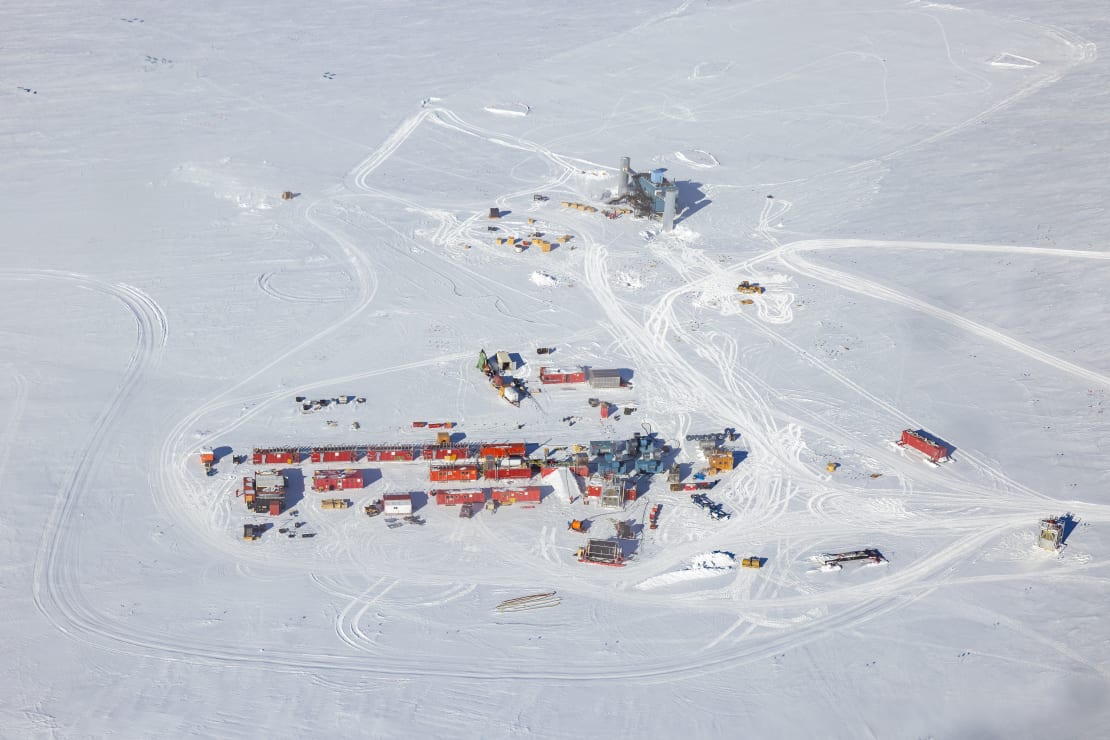

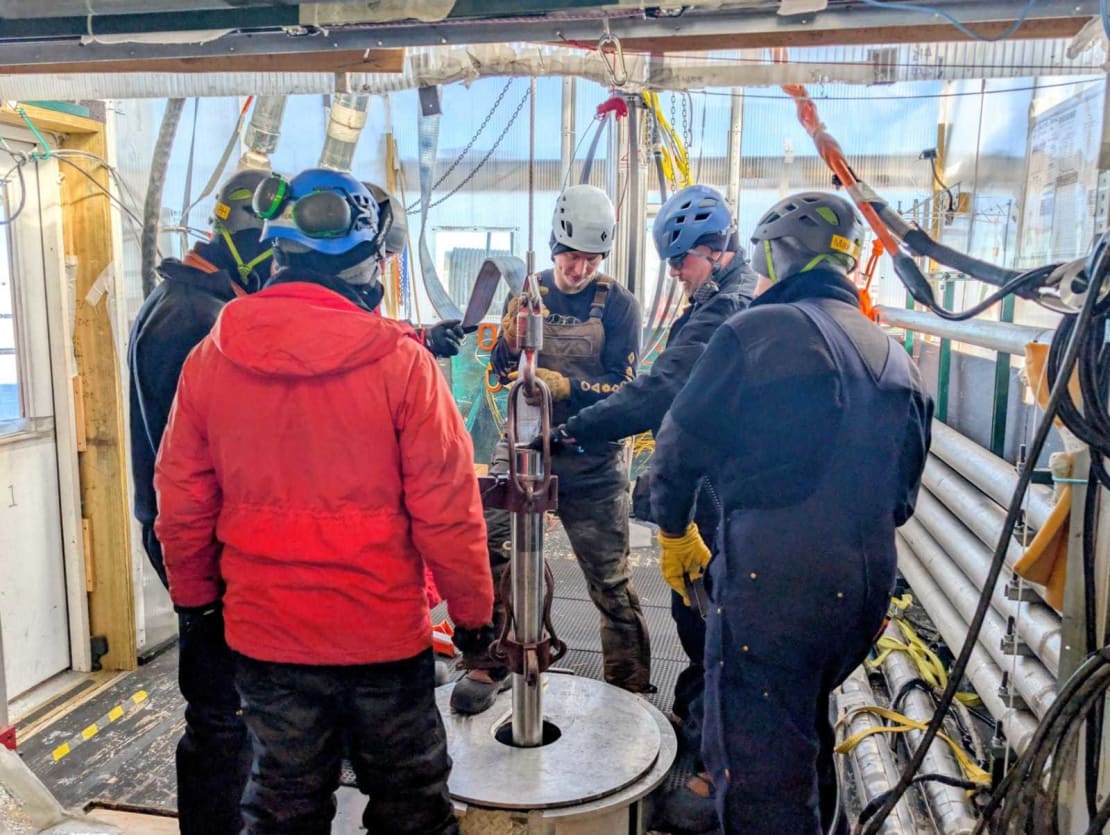
A team of IceCube engineers and scientists and additional engineers from the US, Sweden, Thailand, New Zealand, Taiwan, Germany, Australia and Japan, in coordination with the Antarctic Support Contract, overcame numerous challenges and the harsh working conditions at the South Pole to complete the Upgrade. During the third and final field season, a 5-megawatt hot water drill system, the largest such system in the world, was used to drill the five holes for the Upgrade. The drill team worked around the clock, with each hole taking approximately three days to complete.

“The successful completion of the IceCube Upgrade relied on the critical support of the South Pole station and Antarctic service contractors,” says Vivian O’Dell, the project director for the IceCube Upgrade. “Their essential contributions allowed us to complete the entire installation in one drilling season despite extreme weather conditions and logistical constraints, for which I am deeply grateful.”
As soon as each hole was drilled, the installation team went to work deploying the Upgrade’s higher performing light sensors. Two new types of light sensors, the multi-PMT digital optical module (mDOM) and the “Dual optical sensors in an Ellipsoid Glass for Gen2,” (D-Egg), boast two to three times more sensitivity than the sensors that make up the current detector.
Major contributions came from international institutions in Germany and Japan, which contributed the light sensors, and Sweden, which contributed the surface cables. The US provided the main cables and played a central role in project coordination, logistics, drilling, and sensor construction and testing.
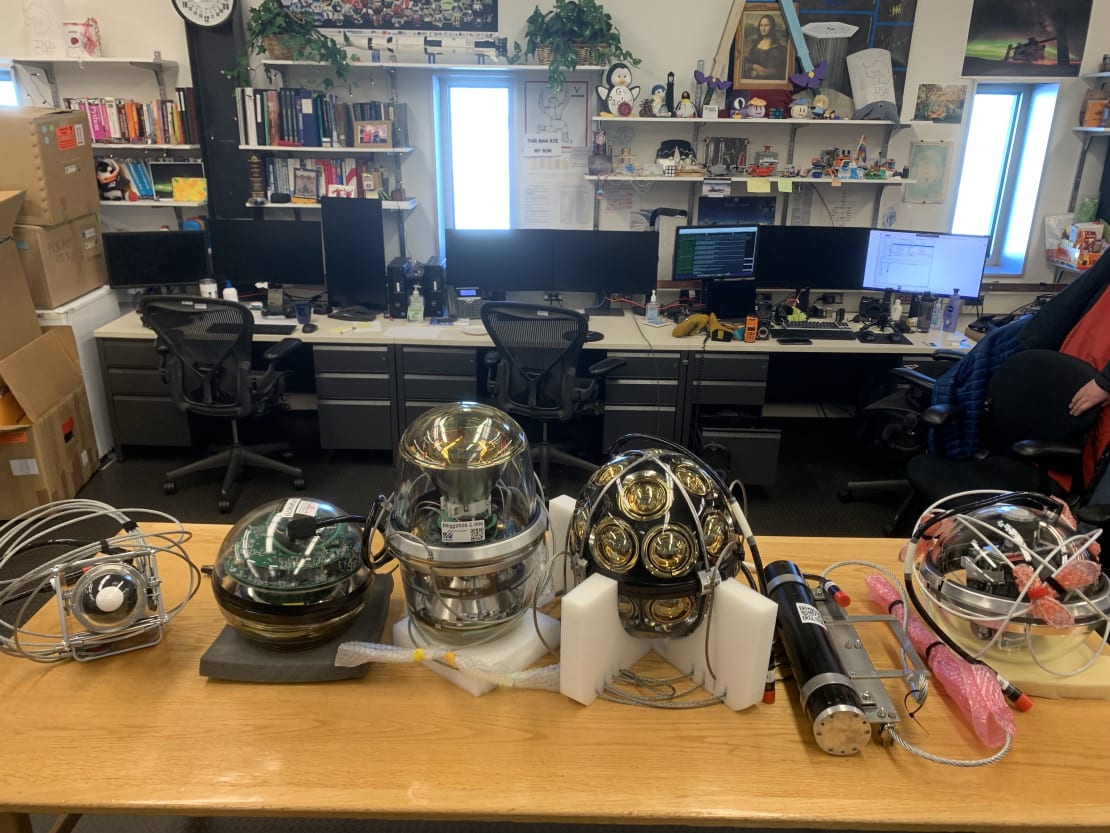

In addition to the mDOMs and D-Eggs, teams based in the US, Germany, Sweden, and Korea contributed precision calibration devices and special modules, such as cameras and prototype sensors for the proposed extension of IceCube, IceCube-Gen2.
“Designing, assembling, and testing the diverse set of photosensors and calibration devices across many institutions and countries is a testament to the collective expertise and commitment that make IceCube successful,” says Erin O’Sullivan, an associate professor of physics at Uppsala University and IceCube spokesperson.

The Upgrade also presented an opportunity to support other scientific endeavors along the way. In collaboration with the U.S. Geological Survey, the crew installed two seismometers beneath the Antarctic ice. These seismometers are the deepest in the world and will help scientists monitor earthquakes with unprecedented clarity. The team has also collected water samples for microbiologists in the US who are looking for signs of life in the deep ice.
“Seeing the refurbished drill come back to life again 15 years after IceCube’s original completion is truly remarkable,” says Albrecht Karle, principal investigator of the IceCube Upgrade. “The team’s around-the-clock effort to deploy the Upgrade is an extraordinary accomplishment. By placing new optical sensors into the clearest ice on Earth, we will measure neutrino properties and observe transient astronomy with a level of precision not previously possible.”
Now that the Upgrade is finished, commissioning will continue to be the top priority in order to verify functionality of the newly deployed devices. The Upgrade, a stepping stone to the proposed IceCube-Gen2, which, if realized, would be eight times the instrumented volume of its predecessor, will ensure that IceCube remains at the forefront of neutrino astronomy for years to come.
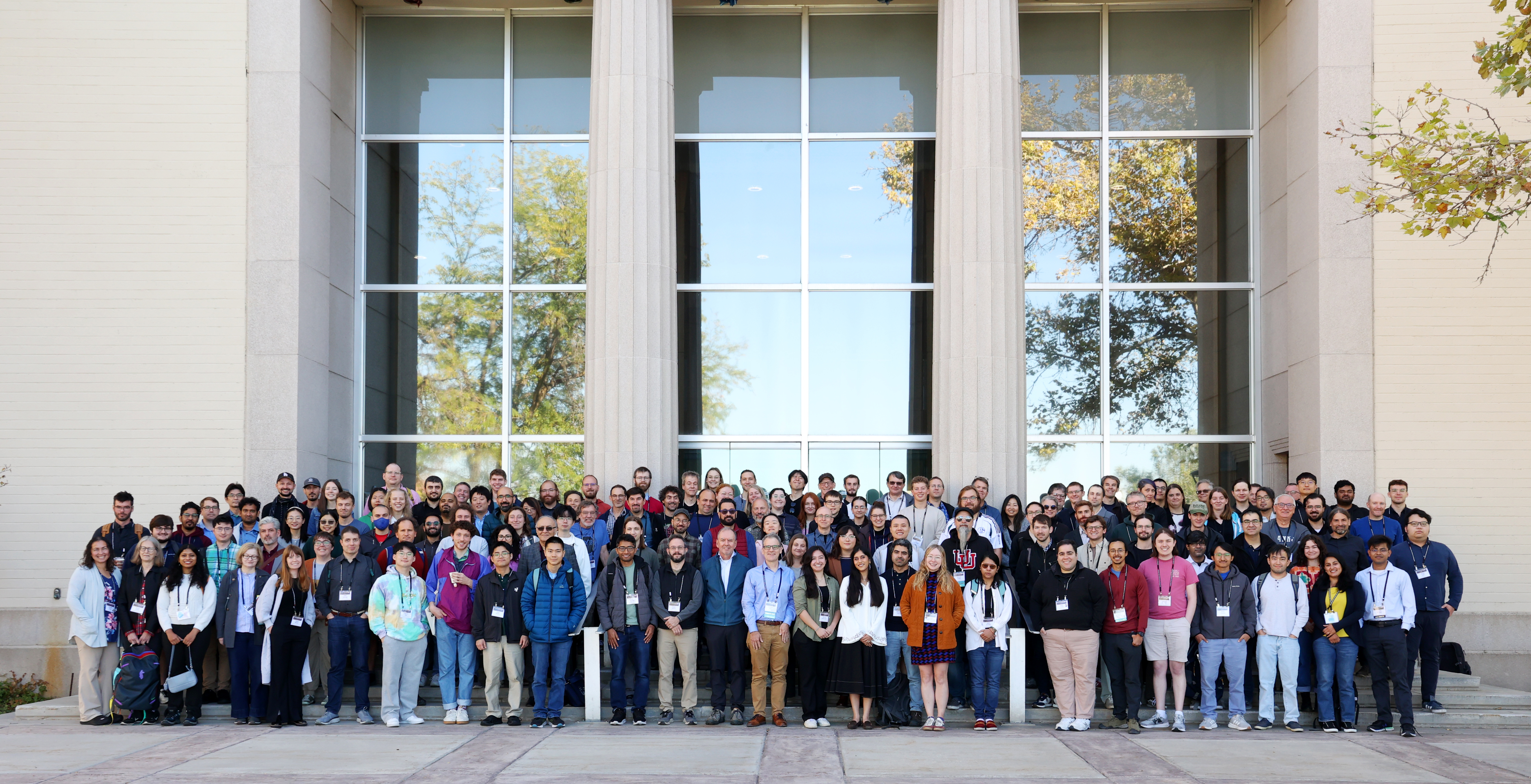
The IceCube Neutrino Observatory was funded and is operated primarily through an award from the U.S. National Science Foundation to the University of Wisconsin–Madison. The IceCube Collaboration, with over 450 scientists in 58 institutions from around the world, runs an extensive scientific program that has established the foundations of neutrino astronomy (https://icecube.wisc.edu/collaboration/institutions). IceCube’s research efforts, including critical contributions to the detector operation, are funded by agencies in Australia, Belgium, Canada, Denmark, Germany, Italy, Japan, New Zealand, Republic of Korea, Sweden, Switzerland, Taiwan, the United Kingdom, and the United States including NSF. IceCube construction was also funded with significant contributions from the National Fund for Scientific Research (FNRS & FWO) in Belgium; Federal Ministry of Research, Technology and Space (BMFTR), Helmholtz Association of German Research Centers and the German Research Foundation (DFG) in Germany; National Research Foundation of Korea, in Korea; Japan Society for the Promotion of Science (JSPS), and the Ministry of Education, Culture, Sports, Science and Technology (MEXT) in Japan; the Knut and Alice Wallenberg Foundation, the Swedish Polar Research Secretariat, and the Swedish Research Council in Sweden; Michigan State University and the University of Wisconsin–Madison in the U.S.
The U.S. National Science Foundation (NSF) is an independent federal agency that promotes the progress of science by investing in research to expand knowledge in science, engineering and education across all 50 states and territories. NSF supports nearly 2,000 colleges, universities and other institutions through competitive grants aimed at advancing science with broad impacts across the nation and its people. Learn more at nsf.gov.
A multimedia gallery is available here.
Science contacts
Albrecht Karle, IceCube Upgrade Principal Investigator
Professor of Physics
Wisconsin IceCube Particle Astrophysics Center, University of Wisconsin–Madison
karle@icecube.wisc.edu
Erin O’Sullivan, IceCube Spokesperson
Associate Professor of Physics, Uppsala University
erin.osullivan@physics.uu.se
Press contacts:
IceCube Press
press@icecube.wisc.edu
608-515-3831
NSF Media Affairs
media@nsf.gov
703-292-7090