
The sunrise is over now at the South Pole, with the sun fully risen. But if you position yourself just so, near a large snowdrift, it can almost appear as though the sun is rising right there. […]
The sunrise is over now at the South Pole, with the sun fully risen. But if you position yourself just so, near a large snowdrift, it can almost appear as though the sun is rising right there. […]

It’s time for sunglasses now at the South Pole—the sun has definitely made its presence clear. And it’s here to stay, or rather for a good long while anyway. […]

Some weeks at the Pole are quiet, and some—like last week—are busy. The IceCube detector had a number of hiccups that required the winterovers’ attention. On top of taking care of IceCube, there were plenty of other things to attend to as far as getting the station ready for the summer crews. […]

The fall IceCube Collaboration meeting wrapped up last Friday in Chiba, Japan. About two thirds of the collaboration, representing 38 institutions in 11 countries, assembled at Chiba University, the home institution of the International Center for Hadron Astrophysics (ICEHAP) group, from September 16–20. […]

The sky just gets brighter and brighter along the horizon. And although auroras are exciting, the dawn sky with its changing colors holds its own special appeal. […]
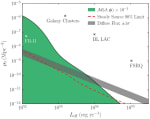
The IceCube Collaboration performed a search for point-source populations using a technique called the non-Poissonian template fit (NPTF) and published their findings in a paper submitted to The Astrophysical Journal. This was the first time the NPTF was used on IceCube neutrino data, and while they did not find any neutrino point-source populations, they proved the technique’s viability. […]
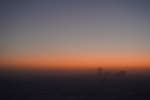
The sky is beginning to take on different colors at the Pole, depending on which direction you’re looking. There’s a hazy band of orange along the horizon, but facing away toward the station the sky appears blue. […]

It was a quiet week at the Pole. And with some bad weather, it was a good time to roam around and take some indoor photos. […]

The IceCube Neutrino Observatory is an array of over 5,000 optical sensors embedded in a cubic kilometer of ice at the South Pole. Optical impurities in the ice affect how light travels through the IceCube detector and thus how the neutrino interactions appear. In a technical paper submitted to the Journal of Cosmology and Astroparticle Physics, the IceCube Collaboration presents a new method to understand the optical properties of the ice, called the SnowStorm method. […]
Introduction The presence of a population of point sources in a dataset modifies the underlying neutrino-count statistics from the Poisson distribution. This deviation can be exactly quantified using the non-Poissonian template fitting technique, and in this work we present the first application of this approach to the IceCube high-energy neutrino dataset. Using this method, we […]