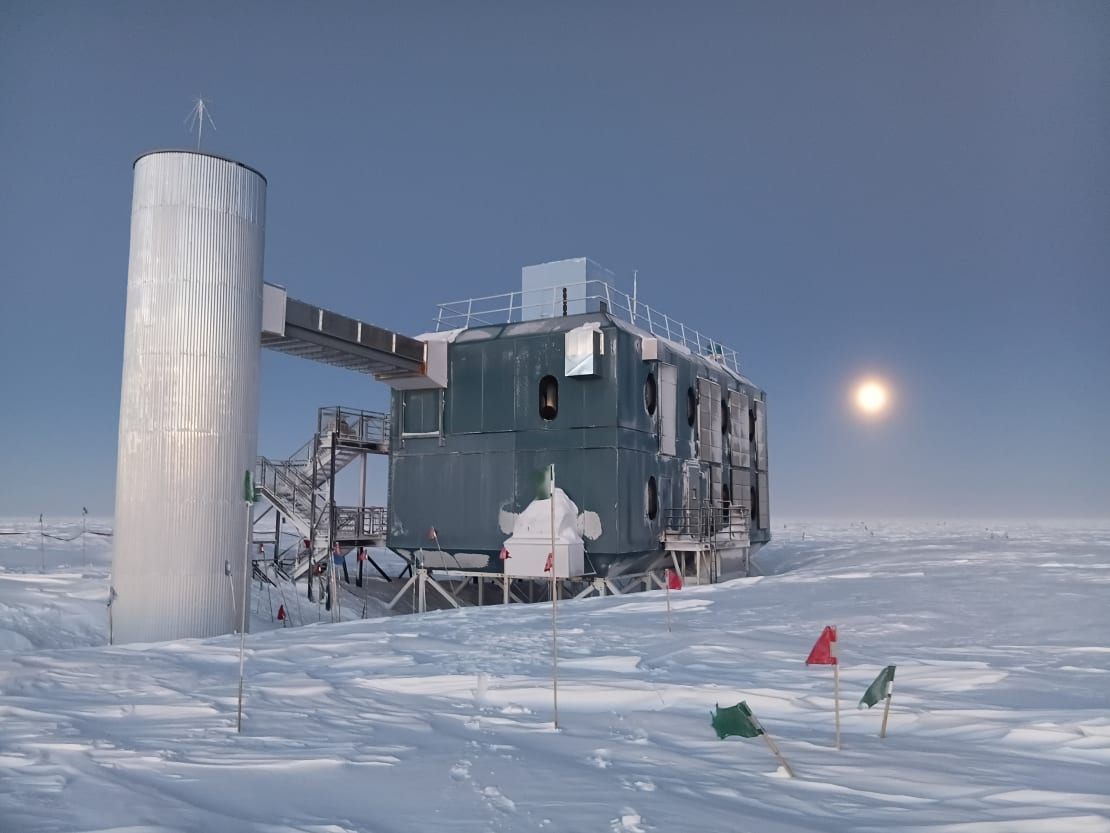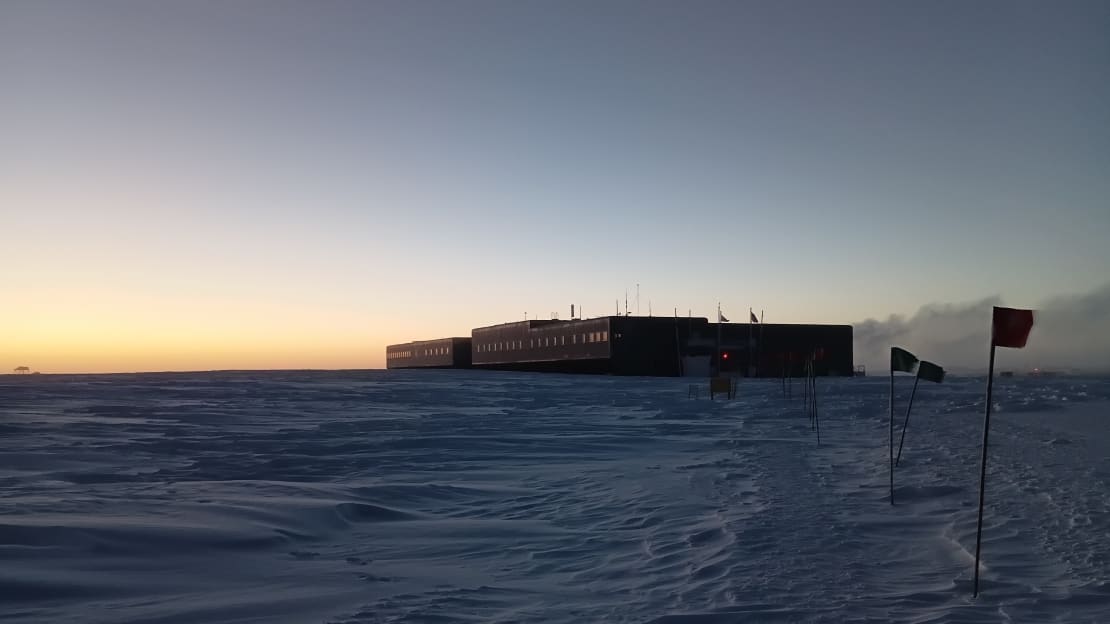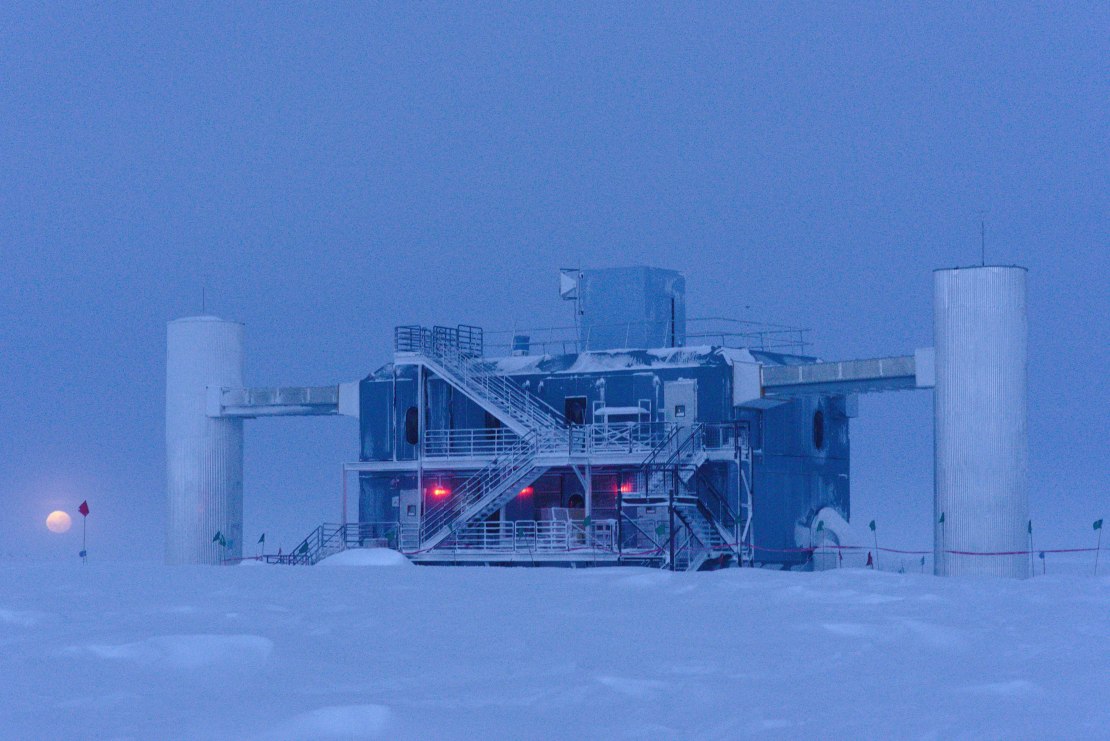
Twilight at the South Pole is a long, drawn-out process that lasts weeks instead of hours. After the sun sets at the Pole, there’s still a period of prolonged dwindling light before everything gets immersed in complete darkness. Although it was still plenty light out last week, it wasn’t so bright as to make it hard to discern the moon. The moon was out and clearly visible, low in the sky, as seen in these two views of the IceCube Lab—rather different-looking views just from changing the viewing direction. Also last week, IceCube winterover Alicia captured an image of the first weather balloon launch for the winter. These regular balloon launches are conducted by NOAA to collect atmospheric data.